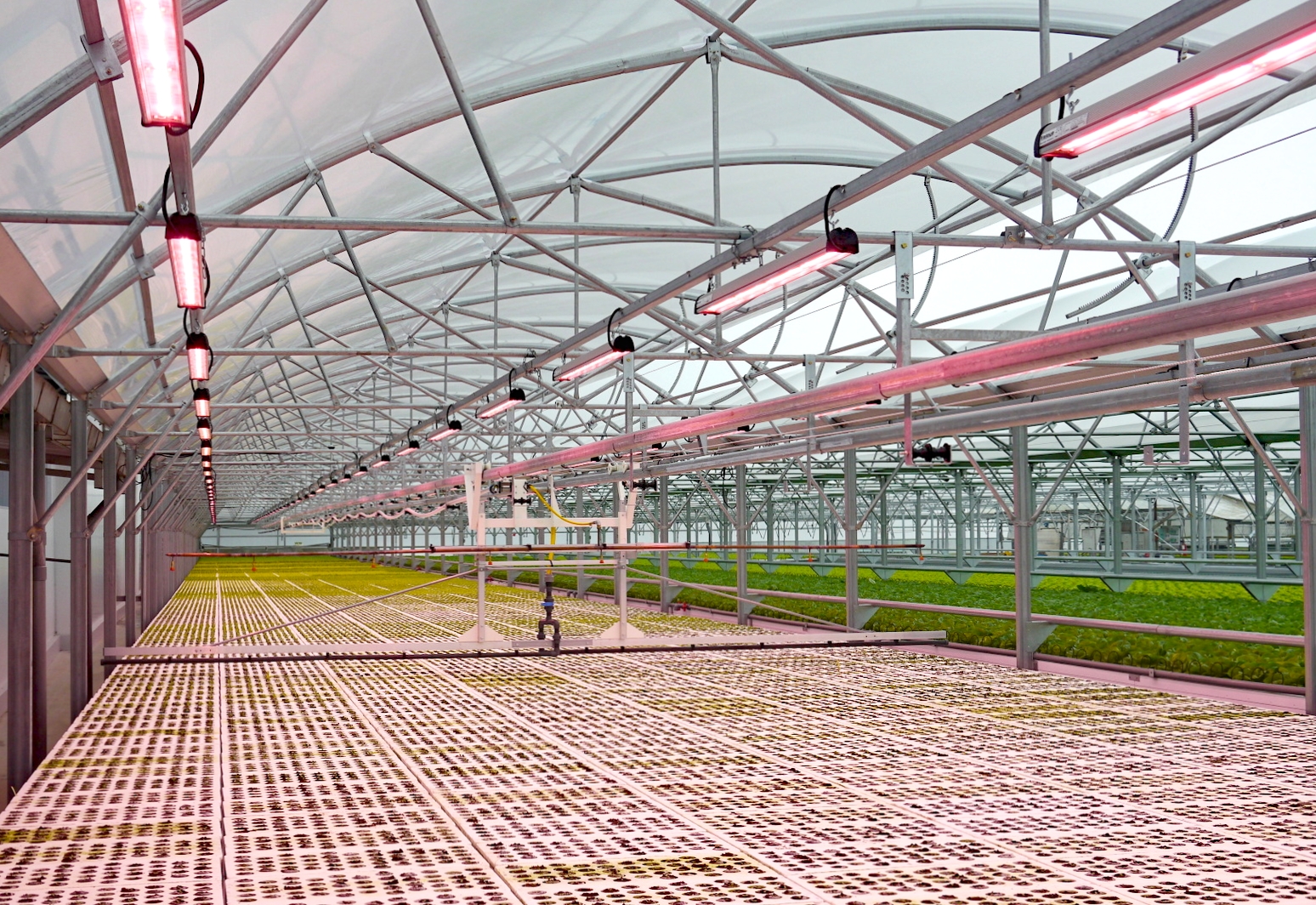
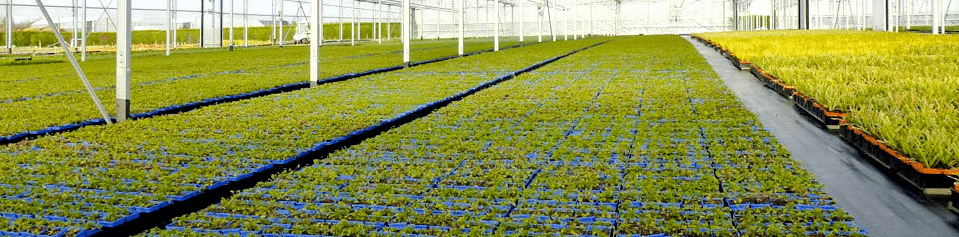

Alberta is rarely the first province people picture when they think about Canadian greenhouse production. That picture is out of date. The Alberta greenhouse market is now one of the faster moving corners of Canadian horticulture, and several of the constraints that held it back for years are finally shifting in the grower’s favour. Whether you produce vegetables, berries, bedding plants or tree seedlings, the next few seasons in this province are worth your attention.
A greenhouse industry ranked fourth in Canada
The numbers set the scene. Alberta’s greenhouse industry ranks fourth in the country, with 195 greenhouses producing roughly 145 million dollars in fruits and vegetables each year, and about 60 percent of them already operating year round. The sector is growing at about 6.2 percent annually, faster than most people outside it realize. An Alberta Agriculture profile put the industry at about 404 acres, or 1.64 million square metres, under glass and plastic.
Vegetables lead the mix. In 2024, vegetables accounted for about 52 percent of Alberta’s greenhouse area. The rest is split between bedding plants and ornamentals, which remain a large share of the business, and a meaningful block of tree seedling production that feeds the reforestation pipeline. Any honest read of the Alberta greenhouse market has to serve all three, because the same climate and the same economics act on all of them.
This sits inside a national market that keeps breaking records. Canadian greenhouse fruit and vegetable sales reached 2.7 billion dollars in 2024, up 8.5 percent. Canada is the North American leader in greenhouse fruit and vegetable production, with more than 920 produce greenhouses supporting over 37,000 jobs. Alberta is a smaller slice of that total, which is exactly why its growth rate matters. There is room to run.
The import gap is the real prize
Here is the figure every Alberta grower should sit with. Alberta imports more than one billion dollars of fruits and vegetables every year. That is demand already on the table, most of it arriving on trucks from the United States and Mexico during the months when local production thins out.
Closing even a slice of that gap is the opportunity. The province’s Buy Local initiative, launched in 2025, is pushing year round local supply as a food security priority. The commercial logic is identical whether you grow cucumbers, strawberries or potted colour. The market wants Alberta grown, and it wants it in January, not only in July.
Public money is backing expansion
Momentum is now meeting capital. In December 2025, the federal and provincial governments launched a three year, 10 million dollar Growing Greenhouses program under the Sustainable Canadian Agricultural Partnership. It funds new construction and expansion of greenhouses and vertical farms, with a focus on year round food production and energy efficiency.
The terms tell you who it is for. Projects need a minimum total investment of about two million dollars, must dedicate at least half the growing area to food, and must raise annual food production by at least ten percent. This is scale capital for serious commercial expansion, and it is food focused, so ornamental only operations sit outside this particular grant even as the broader tailwinds lift them. The first grants have already gone to operators including Big Marble Farms, Gull Valley Greenhouses and Trafford Farms. The Alberta Greenhouse Growers Association called it a game changer for the sector.
Public funding does one thing above all. It lowers the risk on the first private dollar. If you have been sitting on an expansion plan for a commercial greenhouse in Alberta, the maths just improved.
Energy moved, and in Alberta that changes everything
Energy is the largest swing cost in a cold climate greenhouse, and the economics just shifted. As of April 1, 2025, the federal consumer fuel charge, the so called carbon tax, was set to zero and then repealed, which removed it from the natural gas and propane used to heat greenhouses. Industrial carbon pricing still applies to the largest emitters, so the very biggest operators are not fully off the hook, but for most growers heating with gas, a real cost line disappeared.
That relief lands on an industry where other costs keep climbing. In 2024, greenhouse electricity costs rose 8.3 percent and total operating expenses reached 4.0 billion dollars nationally. Alberta greenhouse consultant Dr. Mohyuddin Mirza has pointed to rising utility and input costs as a steady pressure on margins.
The agronomy behind those bills is well documented, and it holds a surprise in Alberta’s favour. Above roughly 40 degrees north in North America, short winter days and low solar radiation make supplemental lighting close to a requirement for serious winter production, and Alberta sits well above that line. In cold climate conditions, the energy needed for space heating and artificial lighting can run between 700 and 1,200 kilowatt hours per square metre per year, with latitude a major driver of that figure. The surprise is light. Southern Alberta, where most of the industry sits, is one of the sunniest regions in the country. One operator chose Lethbridge for specialty lettuce specifically because of the high winter ambient light, the low humidity, the cool summer nights and deregulated power. Strong winter sun partly offsets the high latitude lighting penalty, which is a genuine competitive edge for Alberta growers who design around it.
This is where #RightTech earns its keep. The job is not to chase the cheapest gas bill or the flashiest lighting rig. It is to design the building for the real conditions on the site. An Alberta specific study made the point bluntly: the province shares a latitude with England and Western Europe, but its dry, cold, continental climate causes extreme heat losses from older, poorly specified greenhouses, while simple conservation measures can cut energy use by around 20 percent. Peer reviewed modelling of cold climate greenhouses shows an east to west orientation and well managed thermal screens each shave several percent off annual energy demand, with heat recovery ventilation adding more in the deepest winter. The prairie climate adds its own twist, with relative humidity sometimes dropping near 10 percent, so coatings, screens and misting become part of the climate control, not optional extras. Cheaper gas helps once. A building designed for Alberta helps every winter, forever.
What the Alberta climate demands from a commercial greenhouse
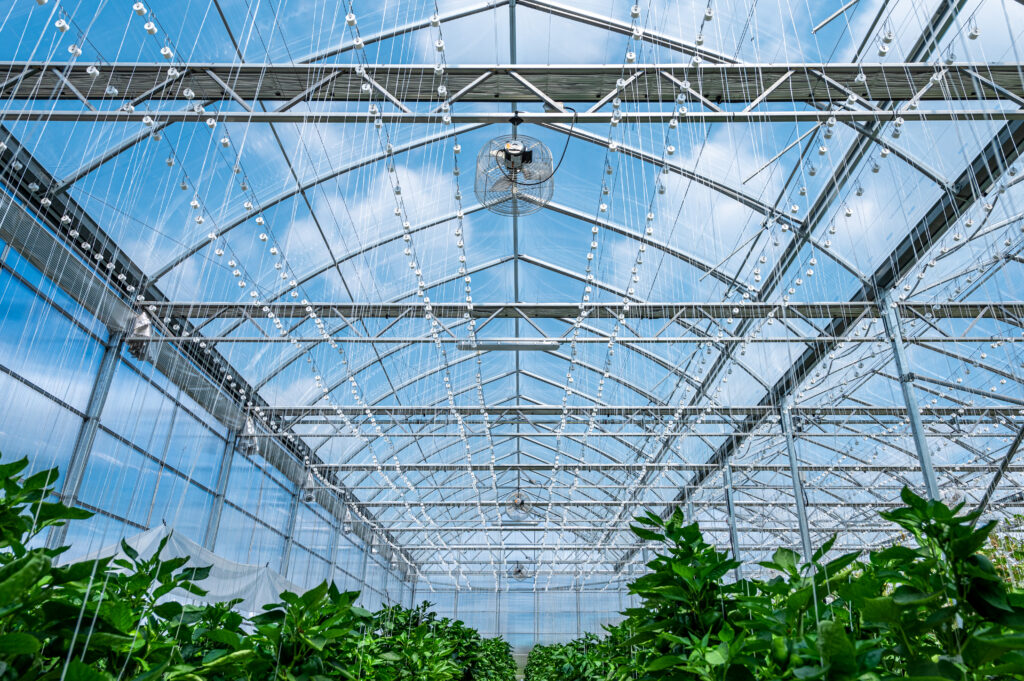
Low temperatures are only half the brief. Alberta’s weather is violent in ways a spec sheet from a mild region never anticipates. The province sits in a chinook zone where temperatures can swing more than 25 degrees in a single day, alongside heavy wet snow, high wind and some of the most damaging hail in the country. Wind gusts over 100 kilometres per hour and sharp 24 hour temperature drops are routine events here, not rare ones.
A structure that pencils out in a temperate climate can quietly fail in Alberta. This is the part of the decision growers underweight, and it decides whether a greenhouse lasts fifteen years or fails in year three. Proper engineering for this province means a structure specified to local snow and wind loads with stamped plans, a frame in galvanized steel that resists corrosion over decades, foundations that hold on prairie soils, and glazing, coatings and gutter detailing that manage light, heat and snow rather than fighting them. None of that is glamorous. All of it is the line between a crop that stays in the ground and an insurance claim.
A view from the field
Christopher McIntosh works with growers across Western Canada and spends his winters watching how structures actually behave in these conditions. His read on the Alberta greenhouse market is blunt.
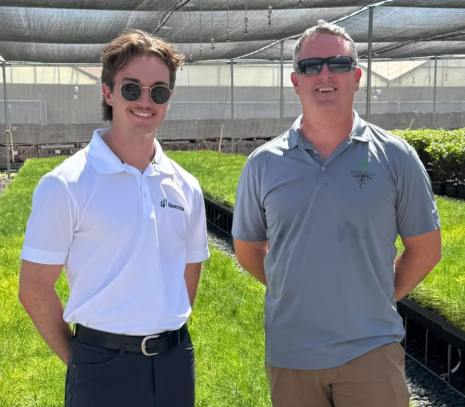
“Alberta is one of the best opportunities in Canadian horticulture right now, and one of the easiest places to get it wrong. The demand is there and the money is there. What sinks people is a building that wasn’t specced for the worst week of the decade and their unpredictable weather changes.”
On the recurring temptation to buy on price alone, he does not hedge.
“Buying on price alone is the most expensive mistake I see. A cheaper frame saves you money once. Then it costs you every winter in heat, snow damage and repairs, and sometimes it costs you the crop. Doing things right from the start is best case scenario for any grower.”
And on how he actually works with a grower:
“I try to put myself in the grower’s shoes. What’s keeping them up at night, whether that’s heating costs, a short shipping window or a site that takes a beating every winter? There’s no one-size-fits-all greenhouse, so we work through those problems together and build around their operation, not ours. That’s what a partnership looks like to me.”

Where this leaves Alberta growers
The pieces are lining up at the same time, which is rare. A growing market, a billion dollar import gap, fresh public funding for expansion, cheaper heat, and some of the best winter light in the country. The window is open for food producers and ornamental growers alike who are ready to invest.
The one caution is the oldest in this business. Build for the climate, not for the brochure. The Alberta greenhouse market rewards growers who match the right technology to their site, their crop and their numbers, and it punishes those who buy the cheapest box and hope. That is the whole idea behind #RightTech, and nowhere in Canada is it tested harder than here.
Sources:
- Statistics Canada, Table 32-10-0456-01, Production and value of greenhouse fruits and vegetables; 2024 greenhouse data release.
- Government of Canada and Government of Alberta, “Growing Alberta’s fresh food future,” news release, December 10, 2025.
- Alberta Agriculture, Profile of the Greenhouse Industry in Alberta, and Economics of Production and Marketing of Greenhouse Crops in Alberta (AGGA data; E. A. Laate).
- Greenhouse Canada, “State of the Industry 2026,” and Growing Greenhouses coverage, December 2025.
- Government of Canada, Greenhouse Gas Pollution Pricing Act, fuel charge repeal effective April 1, 2025 (SOR/2025-107).
- Schaupmeyer, C.A., “Greenhouse Energy Conservation in a Cold Northern Climate,” Acta Horticulturae, ISHS.
- Faramarzpour, H. et al. (2025), “Specification of a greenhouse in cold climate condition, mathematical model and optimization,” Journal of Building Physics.
- Cold climate greenhouse energy reviews on heating and supplemental lighting demand at northern latitudes (Applied Energy; Biosystems Engineering).
- Agroclimatic Atlas of Alberta; City of Calgary, Climate Resilient Home Handbook.