
This post is also available in:  English
  Français (French)
Mid-tech poly greenhouses remain among the most practical and cost-effective ways to commercially produce fresh leafy greens and herbs in Canada and the United States. They require a moderate initial investment compared to a fully automated glasshouse or vertical farm, and they leverage passive (sunlight, natural ventilation) to keep operational costs manageable.
But even with this proven model, growers entering the market repeatedly make the same mistakes. This article covers the five most common ones, drawn from direct field experience across North American greenhouse operations.”
More detail below about leafy greens cultivation in a greenhouse :
1/ Do not select a bad installation site
Not enough light, too cold or too hot (at night), too far from my market, too much energy expenses, bad water quality… the greenhouse installation site location is one of the most important factor for the success of your project.
If you have to clear the land before building your first greenhouse, you need to consider the soil quality (topographic analysis), drainage location (slope?), fresh water availability (and quality?), power supply access, possibility for expansion in the future on the same site ?…
Indeed, this can lead to huge additional expenses if not taken into account in your business plan.
Southern hemisphere
In the Southern hemisphere in tropical countries, in most cases, it is better to invest a bit more buying a highlands location (>700m elevation) with cooler nights, fresh water/electricity availability, enough space for future expansion… than a cheaper lowland location with warmer temperature, less ventilation… But you will have also to take consideration of the light amount (DLI) : Is my future site will get enough light ? It can be cloudy, foggy in some mountainous locations… Is the area exposed to higher pests and diseases risks ?
Regarding the transportation accessibility, can my future trucks come easily to collect the harvest and bring it to my customers ?
The lowland location can be closer to your customers (supermarkets, restaurants…) but if you have agronomic issues to grow due to the extreme climate conditions: it will affect negatively your yield and crops quality. Moreover, you will have to invest more in equipment and energy (cooling system for example) impacting your operational costs ↗ and profitability ↘.
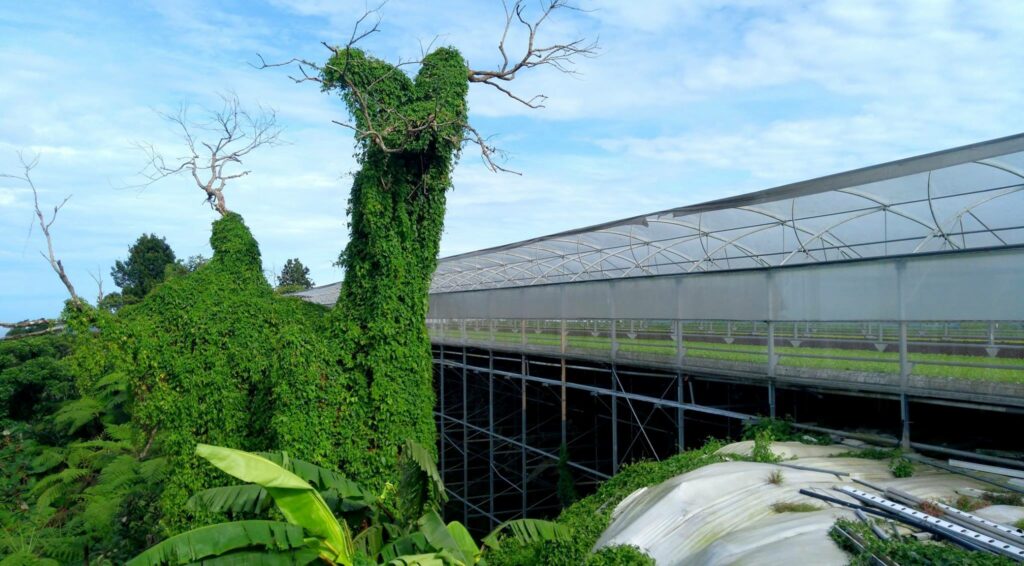
“In Malaysia, one of the best grower leading the hydroponic lettuce market had invested 2 or 3x more per square meter on his new mid-tech greenhouses building a special steel structure on top of the mountain to benefit of the highlands climate conditions and market proximity closer to the big city Kuala Lumpur. The hydroponic system (NFT) was on top of it 25m above the ground !”
Corenthin (Félix) Chassouant
Northern Hemisphere
Under Nordic conditions, a big part of your operational cost will be linked to the heating system. You need to find the best location to be able to get a sufficient amount of light (Southern site exposed) with the possibility to build your insulated technical area on the Northern part of your greenhouse.
What is more, you will need to analyse the best source of energy available and which heating system will be the most efficient in your case: natural gaz, propane, biomass or even electrical furnaces ? It will also depend “of course” of the cost that you will pay at your location.
The proximity to your market (↘ logistic cost) and the land available for expansion are also important factors. Fresher your lettuce are with longer life span more appealing it will be for your clients and final consumer.
A horizontal one layer hydroponic system has the advantage to require less labor compare to open-field cultivation but you will need to be sure that you can find good workers close to your project location.
2/ Size well your first project
Before investing on larger greenhouse complex to grow more, the best advise is to start on a reasonable growing surface in the beginning in order to learn, do mistakes and have the opportunity to know better your future market.
Of course, if you want to sell to the supermarkets or larger companies you will have to produce a consistent good quantity of lettuce heads and herbs. To do this, a first block of greenhouses of around 2,000-3,000 square meters (20,000 to 30,000 square feet) can be a very good start!
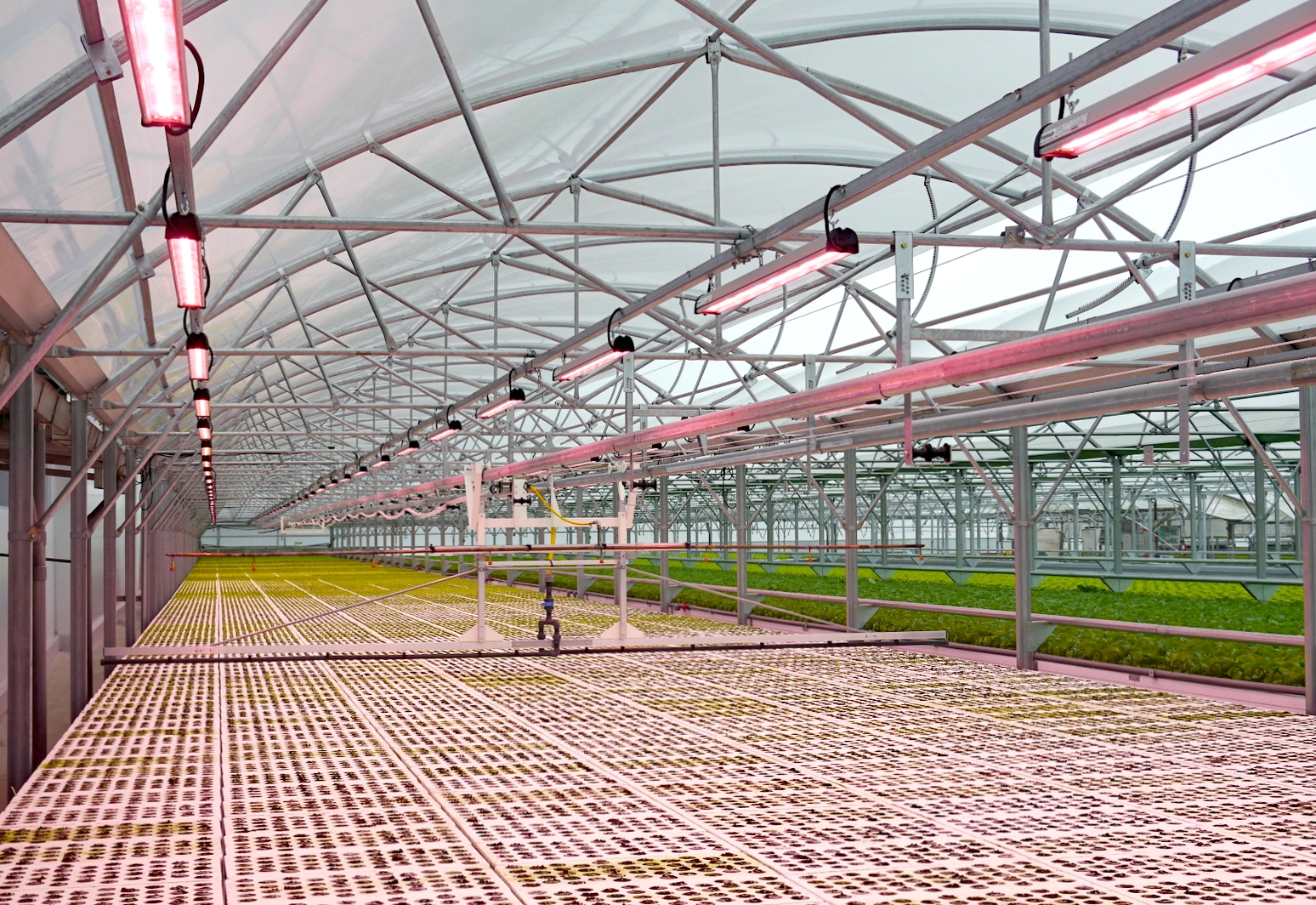
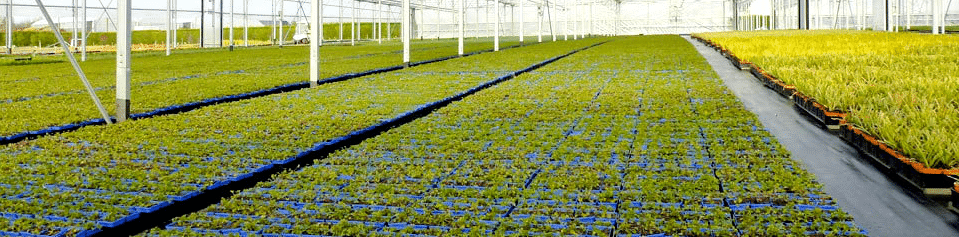
In case you have already more ” hydroponic cultivation” experience doing your own propagation using trays for example. More automated systems like Mobile Tray System (MTS) and Mobile Gullies System (MGS) for a first block of 5000 square meters (1/2 hectare) will be the best solutions to increase your crop density, keeping a good cultivation consistency using fewer workers.
Exemple 1: Hydroponic greenhouse design for Northern countries
4 spans of 30′ wide x 264′ including the technical area on the Northern side.
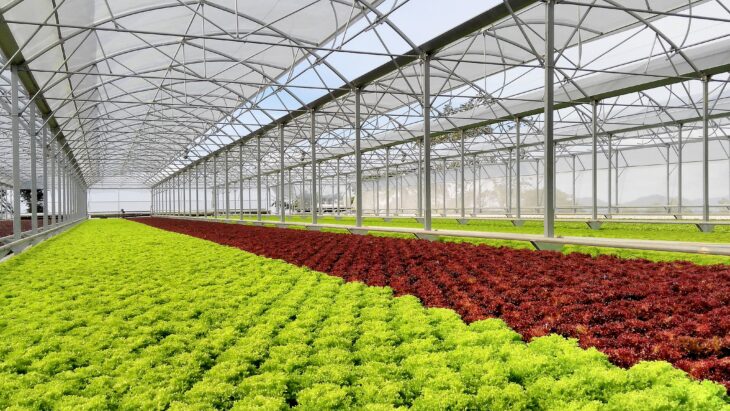
The growing system in the exemple is a fixed gullies NFT with 2 rows of 12′ wide for hydroponic cultivation and a central pathway of 4′ on each span.
(imperial units below)
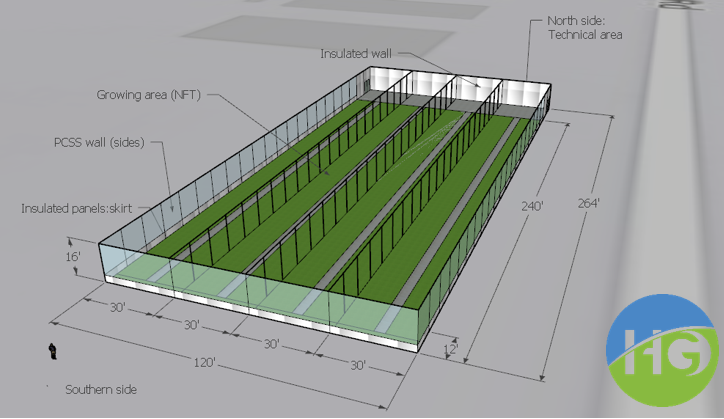
On the perimeter (side walls), you can use an insulated panel for the skirts and clear 8mm double-wall polycarbonate (PCSS) to provide light and high insulation. A double-inflated polyethylene roof (7,2 mil or 180 microns thick) will be the best covering material to get enough light (>85%), anti-drip / thermal treatment, high insulation capacity, and the possibility to have a larger motorized roof vent on top of each bay.
Closing the sides will avoid heat loss, pests, and the potential contamination of diseases. In fact, the climate management will be a combination of passive ventilation (mid-roof) and active air circulation (using HAF or VAF) inside the growing area, as we can see in the example below:
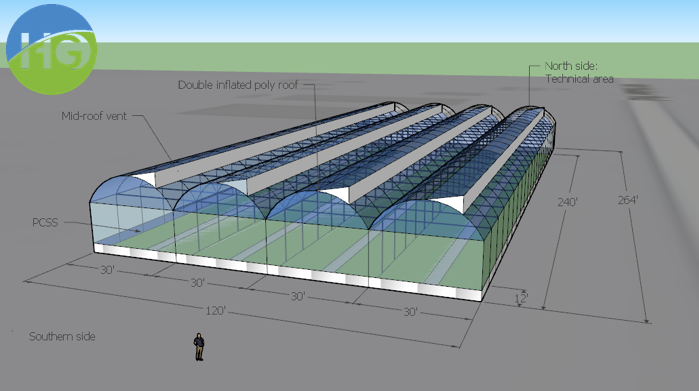
Enough height under the gutter (> 14′) will create a large volume, helping to control the temperature/humidity quick variation with a “buffer.”
Exemple 2: Hydroponic greenhouse design for Southern countries
In warmer conditions, we will take more advantage of the passive ventilation (roof vents + side roll-ups) to ventilate, draining out the excess humidity and heat, especially in the Tropical regions.
(metric units below)
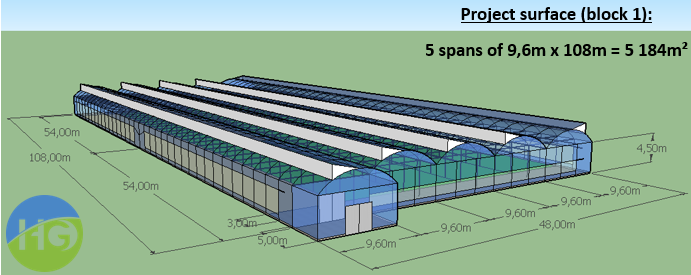
The sides of the greenhouse that are more exposed to pests (white flies, aphids, thrips…) can be covered with an insect-proof netting, but it will require good maintenance to clean it at least once every 6 months; otherwise, it will affect the net’s porosity, cutting some of the ventilation %…
For roofing, single-layer poly is an option, but double-inflated poly is also a good alternative to keep your poly longer and provide better thermal insulation if you are using cooling or heating (at night) in your greenhouse. The most important will be to have a mid-roof vent on each bay to be able to renew the air passively.
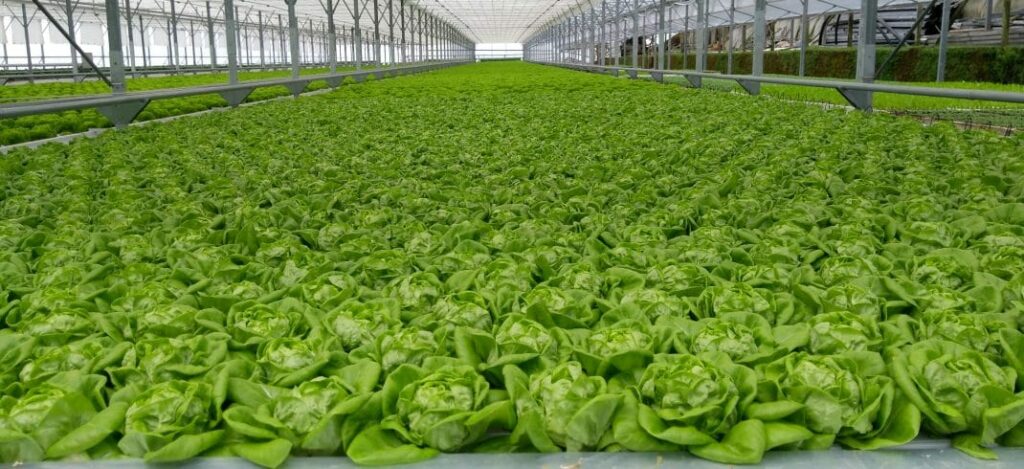
Regarding the horizontal one-layer hydroponic system, it can be fixed NFT gullies like we have seen before or a rack & pinions mobile gullies system (MGS) + mobile trays system (MTS) for the propagation section:
3/ Do not over-equip your greenhouse at the beginning
In a greenhouse, equipment costs can be quite high, especially for artificial lighting (LED), cooling systems (chiller, high-pressure fogging), and post-harvest automation.
The best recommendation, after selecting the right installation site and growing surface size, is to start with the “standard equipment combo” to reach your yield and quality targets. Then, later one you will be able to add new functionalities and equipment if needed.
You need to keep an eye on your business plan at all times, including the Return On Investment (ROI) of your facility.
Before adding expensive equipment, you need to be able to estimate if it will be worth it : do I need an LED or a CO2 injection system to increase my yield? If yes, will the additional yield will cover the cost of my new investment? How long will it take…?
In the Southern hemisphere, a mid-tech greenhouse is the most appropriate approach. Indoor farming or a fully equipped glasshouse will require much more capital investment and operational costs ↗.
To conclude this part, it is important to discuss it with specialists to get the best advice.
4/ Select the right varieties and seeds
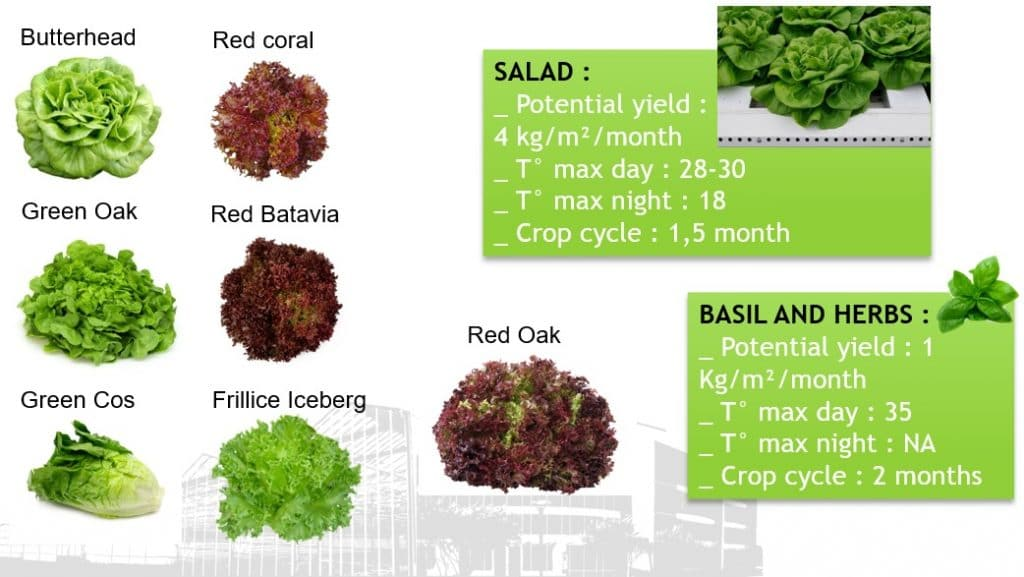
In North American CEA markets, lettuce varieties bred for controlled environments (including Boston, romaine, and oakleaf types) dominate retail and foodservice channels. Varieties should be selected based on your target buyer’s specifications: grocery distributors have strict requirements for head weight, color uniformity, and shelf life that vary significantly from those of restaurant or direct-market buyers. Work with seed suppliers experienced in North American CEA production, as variety performance can differ significantly from European or Asian trial data.
As we have seen in the first post introducing the leafy greens cultivation in a greenhouse, the crop variety and seeds selection is an important factor to consider if you want to be succesfull.
POTENTIAL CROPS (example) : Targeted crops yields and growing conditions
.
A complementary article about high-value alternative crops (grown hydroponically) in North America:
5/ Find the right head growers and advisors
You can have the best site and the best greenhouse (tool) but it is not sufficient! Indeed, the third keys of a successful hydroponic greenhouse is the head grower !
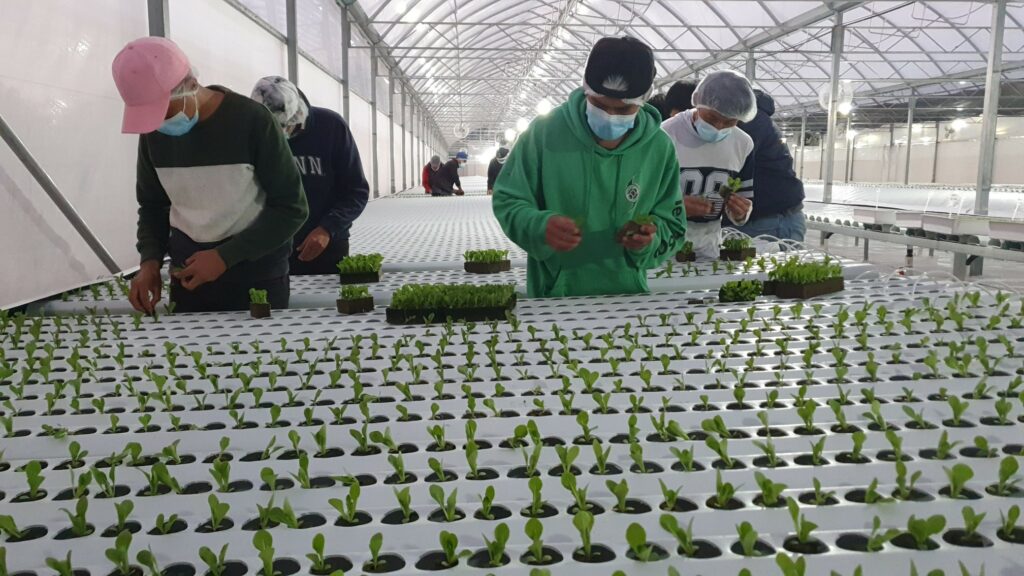
The head grower will be your everyday support anticipating on potential issue adjusting your ferti-irrigation and climate control set-up when it will be necessary. Hydroponic leafy greens cultivation can look an easy system to run, it is not.
In fact, it is a much more complex system where you will need a constant monitoring and control on many environment (water, workers…) and climate parameters to avoid the failure.
Moreover, you will also need to work with strong companies supporting you before/during and after the sale process to follow your progress, give the best service and support you all year round.
If you are planning a hydroponic leafy greens greenhouse in Canada or the United States and want to avoid these mistakes before you break ground, reach out directly.
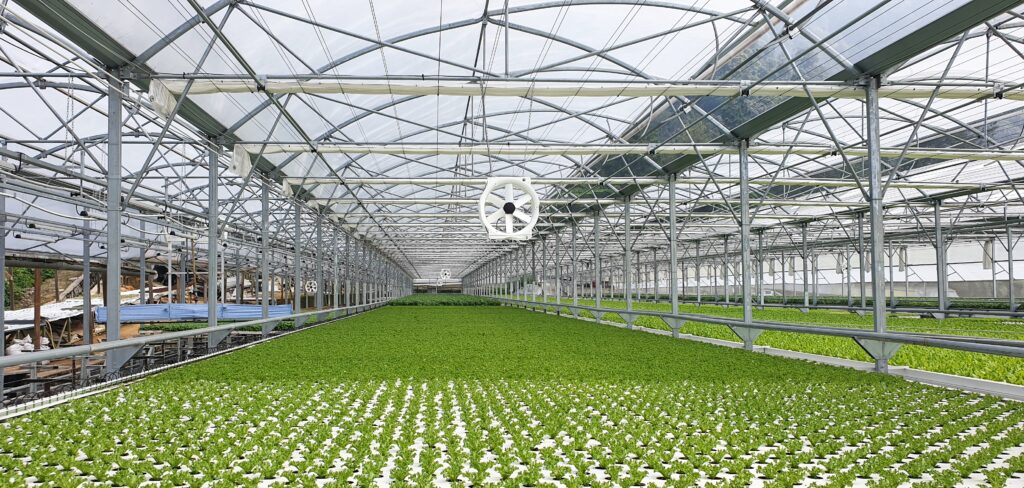
(Bonus personal photos)
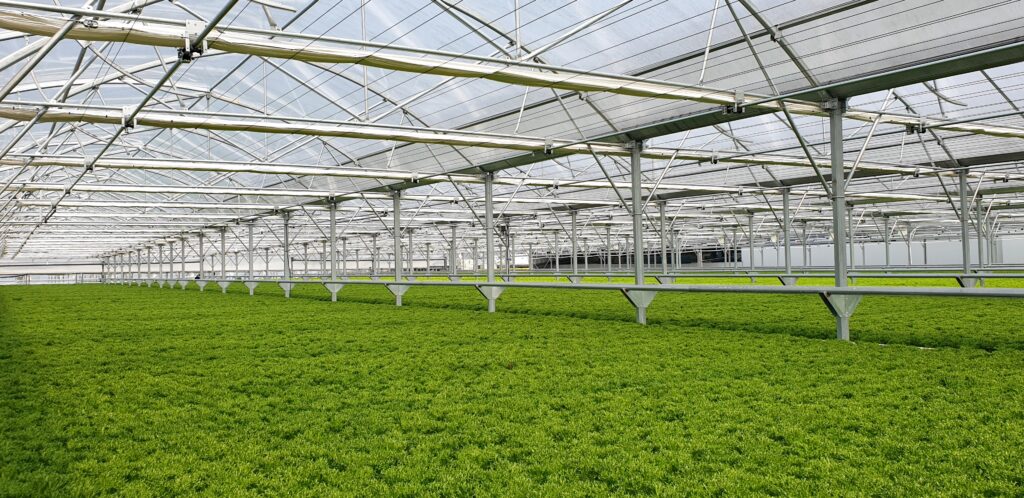
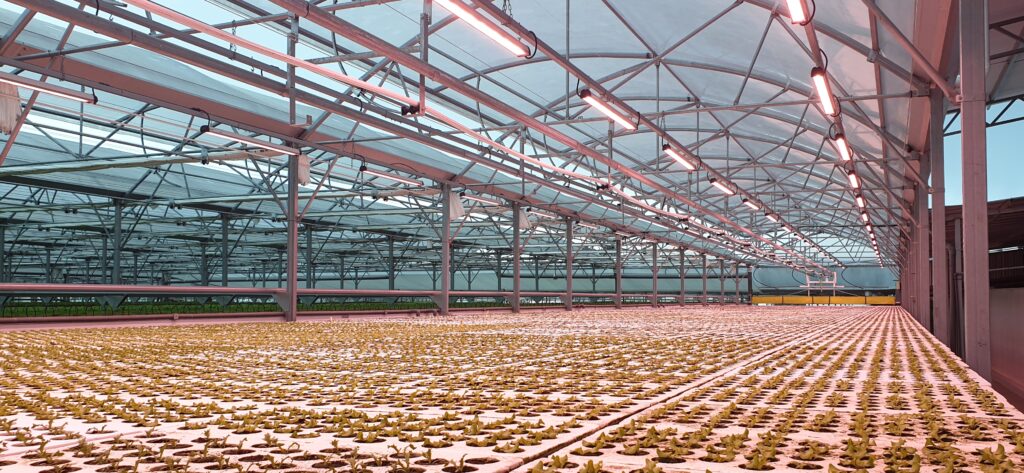
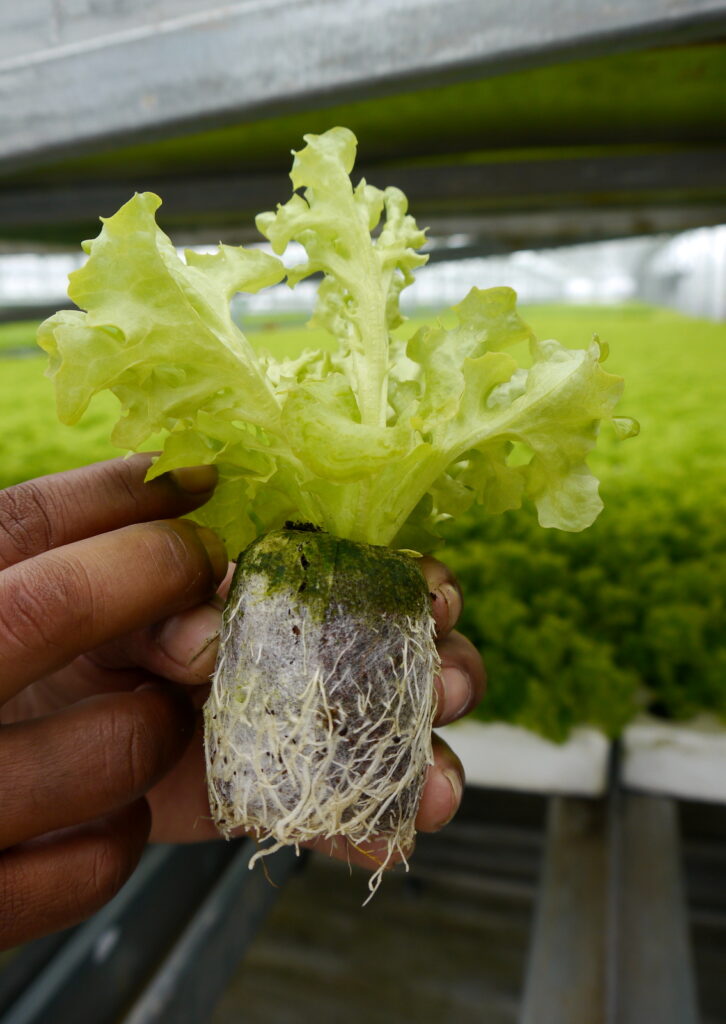
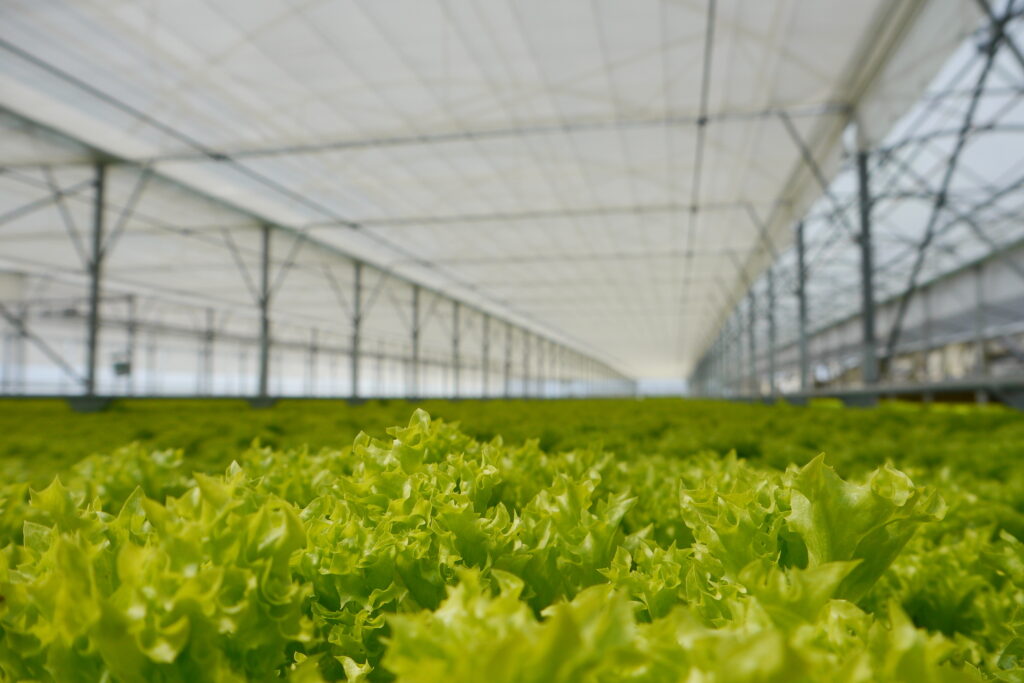
Source:
Personal experiences and pictures from Corenthin (Félix) Chassouant (author)


[…] 5 mistakes to avoid – Hydroponic greenhouse for leafy greens […]
[…] 5 mistakes to avoid – Hydroponic greenhouse for leafy greens […]
Quote for 1000 and 10,000 M2 ?
Hi Guillermo,
I would say it depends if it is your first hydroponic project in a greenhouse. If yes, it would make more sense to start smaller with 1000-3000 square meters maximum and learn by making mistakes. Then, when you will reach the “profit momentum” you will be able to expand on bigger surface 1ha+++
[…] 10 essential information to know before asking a greenhouse quote5 mistakes to avoid – Hydroponic greenhouse for leafy greens […]